Fabric Calculator: how much do you need?
Tell us your project. We’ll do the math.
Get the exact yardage to buy in 20 seconds, no guesswork.
What are you sewing?
Pick a project and we’ll handle the tricky math for you.
What is a fabric calculator?
A fabric calculator tells you exactly how much fabric to buy for a sewing project before you head to the store. You enter your finished dimensions, fabric bolt width, and any allowances for seams, hems, or pattern repeats, and it returns the total yardage you need. No more guessing at the cutting counter, coming home a half-yard short, and discovering the bolt is gone when you go back.
This tool handles the six most common project types: curtains, quilts, tablecloths, clothing, upholstery, and custom dimensions. It accounts for fullness ratios on curtains, pattern repeat alignment, and the difference between finished size and cut size. Those are the details that trip up even experienced sewists when calculating by hand.
Whether you're figuring out how much fabric you need for a pair of linen drapes or buying backing for a king-size quilt, the fabric yardage calculator gets you to an accurate number in seconds. Learn more about how we build these tools or read through our sewing guides for deeper project advice.
How to use this fabric calculator
Each field affects the final yardage. Walk through every step below, including the mistakes to avoid.
How we calculate your yardage
The math behind fabric yardage is straightforward once you know the formula. Below is the exact calculation with a worked example.
Fabric buying guide: what every sewist should know
Understanding Fabric Bolt Widths
36-inch fabric is common for specialty fabrics like ribbon-width trims, some wools, and vintage reproductions. It's the narrowest you'll find regularly and requires the most yardage for wide projects. 44/45-inch quilting cotton is the standard for patchwork and quilt tops. Almost every quilting pattern assumes this width. 54-inch home décor fabric covers more width per cut, making it efficient for curtains and upholstery where you want fewer seams. 60-inch knit and fleece is standard for activewear and blankets.
Wide quilt backing at 108 inches lets you cut a queen backing from just 3 yards instead of the 8 yards you'd need from 44-inch fabric. It costs more per yard, but saves significant yardage and eliminates the center back seam. Read our guide to fabric bolt widths for a detailed comparison across project types.
How Pattern Repeats Add to Your Yardage
A pattern repeat is the vertical distance before the design starts over. A 12-inch floral stripe repeat on curtain panels means each panel's cut length gets rounded up to the nearest 12 inches. On a 3-panel set with 84-inch drops, that can add 9 to 27 inches of extra fabric, easily half a yard or more that most people don't budget for.
Large repeats of 18 to 24 inches can add 1 to 2 extra yards per panel pair. This is the most common reason sewists run short on home décor projects. Always check the repeat listing on the fabric product page before ordering online. Our pattern repeat guide walks through the calculation in detail with real examples.
Curtain Fullness Ratios Explained
Fullness is how gathered or pleated your curtains will look. 1x fullness (flat panels) means the fabric width matches the window exactly, which is fine for sheer panels behind drapes but flat-looking as a standalone treatment. 1.5x creates a casual, relaxed look popular with rod-pocket and tab-top styles. 2x fullness is the standard for most classic curtain styles and creates a clean, full drape. 2.5x is used for formal pinch-pleat and goblet-pleat headers that hold a sculptural fold.
Higher fullness looks better, but costs significantly more fabric. A 60-inch window at 2.5x fullness needs 150 inches of fabric width versus 90 inches at 1.5x, a difference of 60 inches, or roughly 2 extra yards depending on panel height. See our curtain fullness guide for visual examples of each style.
When to Add Extra Yardage
The calculator gives you the exact minimum. In practice, add extra for these common situations:
- Fabric shrinkage: Add 5 to 10% for cotton, linen, and rayon. Cotton quilting fabric shrinks 2 to 3% in length on the first hot wash.
- Cutting errors: A ¼-yard buffer saves projects. Mistakes happen, and spending an extra $3 to $5 now is always cheaper than an emergency re-order.
- Matching seams: If your panels need to align at seams, the pattern repeat calculation handles this. Just make sure you buy the repeat buffer the calculator adds.
- Future repairs: Upholstery and home décor projects benefit from saving a ¼ yard for repairs. Fabric dye lots change, and a repair patch from a different lot is obvious.
Read our full guide on fabric shrinkage and pre-washing before cutting expensive or difficult-to-source fabric.
Who should use this calculator?
This tool is designed for anyone who buys fabric before they cut it, which is everyone. The sewists who reach for it most often:
- Home sewers making curtains, pillow covers, table runners, and clothing need accurate yardage before driving to the store. Buying too little means a second trip; buying too much wastes money on fabric you'll never use.
- Quilters calculating cotton yardage for quilt tops, borders, backing, and binding. The ¼-inch seam allowance standard in quilting makes every inch count, and this quilt fabric calculator applies that standard automatically.
- Upholstery DIYers measuring for dining chairs, accent chairs, sofas, and cushions. A dining chair uses 1.5 to 2 yards; a sofa can need 12 to 20. Getting it right the first time matters.
- Interior designers specifying fabric orders for client projects need accurate estimates to quote jobs confidently. The per-panel breakdown helps when ordering multiple window treatments.
- Crafters buying online can't hold the bolt to eyeball how much they need. A few seconds with this sewing fabric calculator removes all the guesswork before you add to cart.
No matter your project, use the calculator above to get an accurate yardage estimate before you buy.
Deep-dive sewing guides
Practical how-tos from our team on pattern repeats, fullness ratios, fabric shrinkage, and every detail that affects yardage.
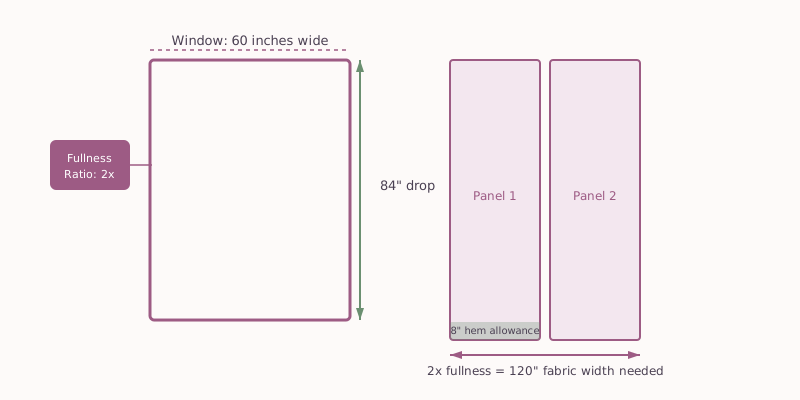
How Much Fabric Do You Need for Curtains?
Calculate curtain fabric yardage correctly with our step-by-step guide. Covers fullness ratios, pattern repeats, hem allowances, and common mistakes.
Read the guide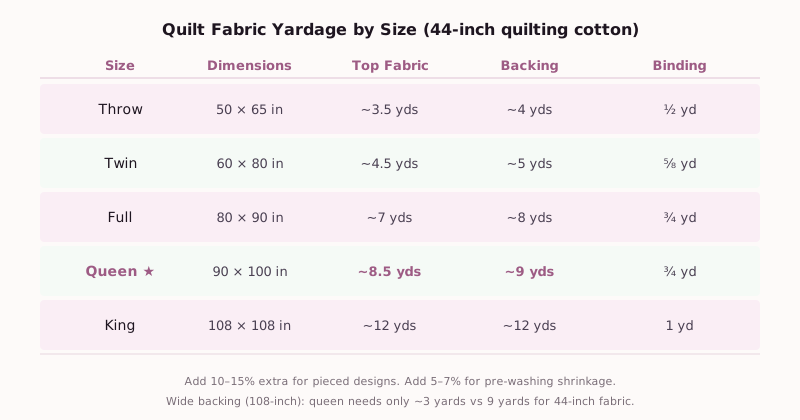
Fabric Yardage for Quilts: From Throw to King Size
How much fabric do you need for a quilt? Get accurate yardage estimates for throw, twin, full, queen, and king quilts, including top, backing, and binding.
Read the guide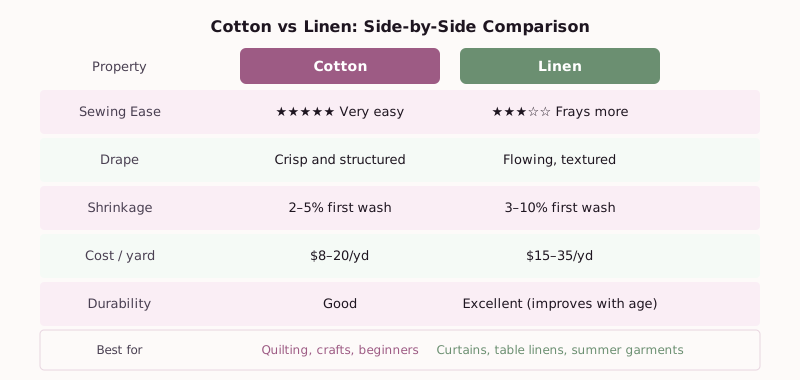
Cotton vs Linen Fabric: Which Is Right for Your Project?
Cotton and linen both work for curtains, clothing, and home décor, but they behave very differently. Learn which fabric suits your project, budget, and care needs.
Read the guideFrequently asked questions
Measure your window width and multiply by the fullness ratio (1.5x for standard fullness, 2x for full, 2.5x for luxury pleats). Divide by fabric width to get number of panels. Add 8-12 inches to the finished drop for top and bottom hems. If using patterned fabric, round each panel up to the nearest pattern repeat. For a 60-inch window at 2x fullness with 84-inch drop using 54-inch fabric, you need 3 panels at roughly 96 inches each = 8 yards.
Fabric widths vary by type. Quilting cotton is typically 44-45 inches wide. Home décor and upholstery fabrics are usually 54 inches. Apparel knits and fleece are often 58-60 inches. Wide quilt backing is 108 inches. Some specialty fabrics like tulle may be 108 inches wide, while silk charmeuse can be as narrow as 36 inches. Always check the bolt width before purchasing.
Add one full pattern repeat per panel after the first. If your pattern repeat is 12 inches and you need 3 panels, add 24 inches (2 extra repeats) to ensure alignment. For large repeats over 18 inches, buy an additional half-yard as insurance. Directional prints (one-way designs) may require even more fabric since every piece must be cut in the same direction.
Standard seam allowances vary by project: 5/8 inch (1.6 cm) is standard for garments and most sewing patterns, 1/4 inch (0.6 cm) is standard for quilting, and 1/2 inch is common for home décor projects. French seams and flat-felled seams require a wider initial allowance (typically 5/8 inch trimmed to 1/4 inch). Always check your pattern instructions for the specified allowance.
Quilt fabric needs depend on the pattern, but a general rule: a queen-size quilt (90×100 inches) needs approximately 8-9 yards of 44-inch fabric for the top, 8 yards for the backing (or 3 yards of 108-inch wide backing), and separate yardage for binding (about 3/4 yard). Quilt patterns with many small pieces require more fabric due to cutting waste. Always buy 10-15% extra for quilts.
Measure each surface to be covered (seat, back, arms, cushions) and add 4-6 inches per side for pulling and stapling. Convert to a cutting layout based on your fabric width. A standard dining chair needs 1.5-2 yards of 54-inch fabric. A sofa cushion cover needs 2-3 yards. A full sofa reupholstery typically requires 12-20 yards depending on the style and size.
Fullness refers to the ratio of fabric width to finished width, creating gathers, pleats, or draping. For curtains, 1.5x fullness is standard for casual tab-tops, 2x for classic rod-pocket or ring-top curtains, and 2.5x for formal pinch-pleat drapes. Table skirts typically use 2-3x fullness. Garment gathers usually specify 1.5-2x. Always multiply your finished width by the fullness ratio before calculating fabric needed.
Yes, prewashing is recommended for most natural fiber fabrics (cotton, linen, rayon) because they can shrink 2 to 5% on first wash. Cotton quilting fabrics may shrink up to 3% in length and 1 to 2% in width. Always buy extra yardage to account for shrinkage: add 5% to your calculated total. Prewashing also removes sizing that can affect sewing performance. Dry-clean-only fabrics and most synthetic fabrics do not need prewashing.
One yard equals 0.9144 meters, and one meter equals 1.0936 yards. For quick conversion: multiply yards by 0.9 to get approximate meters, or multiply meters by 1.1 to get approximate yards. Most US fabric stores sell by the yard, while European and many international stores sell by the meter. When following a pattern from another country, always convert before purchasing.
This calculator includes a waste estimate based on the difference between the fabric purchased and the finished dimensions needed. As a general rule, expect 10-15% waste for simple rectangular projects (curtains, tablecloths) and 20-30% waste for garments with curved pattern pieces. Irregularly shaped upholstery projects can have 30-40% waste. Buying a little extra is always cheaper than running short mid-project.
Fabric Calculator Team
Sewing and fabric specialists who build accurate, easy-to-use calculators for makers.