Fabric Bolt Widths: 36", 44", 54", and 60" Fabric Explained
Why does fabric bolt width matter? Choosing the wrong width can cost you extra yards. This guide explains standard fabric widths and which to use for each project type.
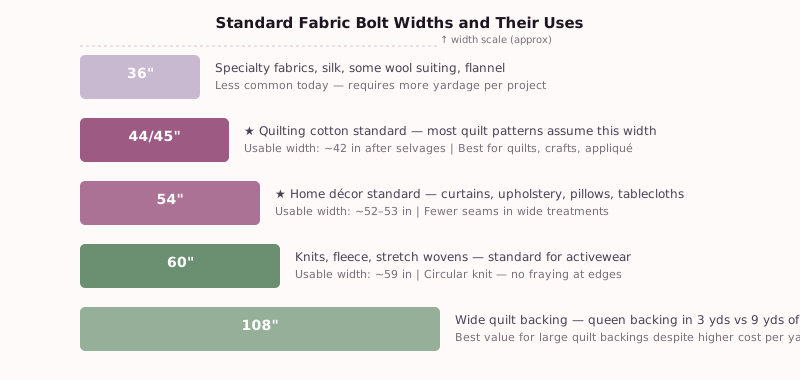
There are only four bolt widths you really need to know: 36 inches for specialty and heritage fabrics, 44 or 45 inches for quilting cotton, 54 inches for home décor and upholstery, and 60 inches for knits, fleece, and wider apparel fabrics. Pick the wrong one when calculating yardage and you can easily overbuy or underbuy by several yards on a single project.
Fabric width is the measurement across the bolt from selvage to selvage. It directly determines how many cuts you need to cover a given width, and therefore how much total yardage you buy. The difference between 44-inch and 54-inch fabric for a set of curtains can be several yards and $50 or more.
What follows covers why fabric comes in different widths, what each width is best suited for, and how to factor bolt width into your yardage calculations.
Why Fabric Comes in Different Widths
Fabric width is determined by the loom width used to weave it. Different looms are optimized for different textile types and production scales.
Narrow looms (36 to 45 inches) are traditional and still used widely for specialty textiles, ribbon-width fabrics, and some fashion fabrics that benefit from the tension control of a narrower loom. Wide looms (54 to 108 inches) are modern, high-capacity machines used for home furnishing fabrics, industrial textiles, and wide-format specialty goods.
The selvage edges (the finished edges at each side of the bolt) are typically 0.5 to 1 inch per side. Usable width equals total width minus both selvages. For a 44-inch bolt, usable width is typically 42 to 43 inches.
36-inch Fabric
What it is: The narrowest standard width. Once common for most fabrics before wide-loom technology became widespread.
What's sold at 36 inches today:
- Flannel and some brushed cottons
- Some silk and luxury fashion fabrics
- Lining fabric for garments
- Some wool suiting fabrics
- Ribbons and trims (some sold by the yard at 36-inch width)
- Specialty ethnic and traditional textiles (Indian cotton, Japanese selvedge denim)
When to use it: Only when a specific fabric you want happens to come in this width. For most home projects, 36-inch fabric is inefficient. You'll need more yards, more seams, and more matching work.
Yardage implication: On a 90-inch-wide quilt top, 36-inch fabric requires 3 widths (compared to 2 for a 54-inch fabric), meaning more seams and typically more total yardage because every joining seam loses fabric.
44/45-inch Fabric: The Quilting Standard
What it is: The standard width for quilting cotton and many craft fabrics. When a quilting pattern lists fabric requirements, it almost always assumes 44-inch width.
What's sold at 44/45 inches:
- Quilting cotton (the overwhelming majority of all quilt fabric)
- Craft fabric from major retailers
- Many printed cotton fabrics
- Muslin and canvas
- Some shirting fabrics
Why 44/45 inches: This width became standard for quilting cotton because it fits efficiently on mid-sized looms and produces bolts of the right weight and width for retail display and cutting.
Usable width: With selvages trimmed, expect 42 to 43 usable inches from a 44-inch bolt.
When to use it: Quilts, quilted bags, appliqué projects, craft projects. Almost any project where the pattern specifically calls for quilting cotton.
Yardage calculator tip: In the fabric calculator, select "44/45 inches (quilting cotton)" and enter your finished dimensions to get exact yardage.
54-inch Fabric: Home Décor and Upholstery
What it is: The standard width for home décor fabric, decorator fabric, and most upholstery fabric. This is the default for curtains, slipcovers, decorative pillows, table linens, and window shades.
What's sold at 54 inches:
- Home décor cotton, linen, and blends
- Upholstery fabric (velvet, chenille, woven jacquard)
- Drapery fabric
- Outdoor and performance fabric for patio furniture
- Many suiting woolens
Why 54 inches: Home furnishing projects are typically wider than garments. A wider bolt means fewer seams in curtain panels and upholstery pieces, which is aesthetically cleaner and structurally stronger for furniture applications.
Usable width: 52 to 53 inches after selvages. When calculating curtain panels, use 53 inches as your per-panel usable width.
When to use it: Any home project: curtains, slipcovers, throw pillows, table linens, upholstery. The extra 10 inches over 44-inch fabric cuts the number of panels needed for wide treatments significantly.
Yardage difference: For a pair of curtains on a 60-inch window at 2x fullness, 54-inch fabric needs 4 total fabric widths (roughly 6 yards). The same curtains in 44-inch fabric need 5 widths (higher total yardage). The wider fabric is more efficient.
60-inch Fabric: Knits and Wide Apparel
What it is: Standard width for jersey knit, fleece, and many woven apparel fabrics sold at 60 inches.
What's sold at 60 inches:
- Jersey knit (most common t-shirt and legging fabric)
- Fleece and sweatshirt knit
- Ponte de roma (structured stretch fabric for pants and skirts)
- Interlock knit
- Some linen and cotton voile
- Many stretch woven fabrics
Why 60 inches: Knit fabric is produced on circular knitting machines that create tubular fabric opened to its full flat width, often 60+ inches. The extra width allows efficient cutting of large pattern pieces (pants legs, full skirts) without vertical seams.
Usable width: 58 to 59 inches. Knit edges don't fray, so selvage trim is minimal.
When to use it: Knit garments (t-shirts, leggings, activewear), fleece blankets, stretch woven garments. The wider width means most garment pattern pieces fit without piecing.
108-inch Fabric: Wide Quilt Backing
What it is: The widest standard fabric width, designed specifically for quilt backing and some bedding applications.
What's sold at 108 inches:
- Wide-back quilting cotton
- Flannel backing fabric
- Some sheeting fabric
The advantage: A queen-size quilt (90 inches wide) requires only one width cut from 108-inch fabric, versus three cuts from 44-inch fabric. Total yardage drops from roughly 9 yards to 3 yards. The saving is significant even though 108-inch fabric typically costs more per yard.
Yardage example: Queen quilt backing (90×100 inches + ease):
- 44-inch fabric: 3 widths × 108-inch cut length = 9 yards
- 108-inch fabric: 1 width × 108-inch cut length = 3 yards
At $12/yard for 44-inch versus $15/yard for 108-inch: 44-inch costs $108 total, 108-inch costs $45 total. A significant difference for a single quilt backing.
How Bolt Width Affects Your Yardage Calculation
The fabric calculator accounts for bolt width automatically. Select the correct width from the dropdown, enter your project dimensions, and the calculator determines exactly how many panels fit across and the total yardage needed.
Changing the bolt width selection can dramatically change your yardage output. If you're comparing two fabrics at different widths and want to know which is more economical, calculate the yardage needed for each and multiply by the price per yard. Total cost matters more than price per yard when widths differ.
See our guide on how much fabric for curtains for a detailed example of bolt width affecting curtain yardage. For quilts, our quilt fabric yardage guide walks through backing calculations for both 44-inch and 108-inch fabric.