Fabric Yardage for Quilts: From Throw to King Size
How much fabric do you need for a quilt? Get accurate yardage estimates for throw, twin, full, queen, and king quilts, including top, backing, and binding.
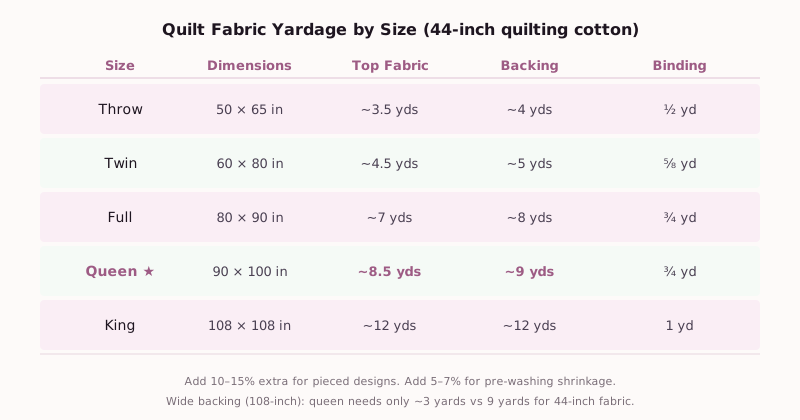
Picture a queen-size quilt, roughly 90 by 100 inches. For the top, you'll use somewhere between 8 and 9 yards of 44-inch fabric. The backing takes another 8 yards at that same width, or about 3 yards if you step up to 108-inch wide backing. Add roughly three-quarters of a yard for binding, then pad everything by 10 to 15 percent to cover cutting waste. Those are the numbers most quilters never quite memorize, and they are the reason so many projects run short on the wrong day.
Quilt yardage is one of those deceptively simple calculations that turns complicated fast. A single-fabric quilt top is straightforward. The moment you add a pieced design, borders, and binding, though, you're tracking six or eight separate fabric requirements. Then there's backing, which needs entirely different math.
This post walks through yardage for every standard quilt size and every major component: top, backing, and binding. It also covers the common traps that leave quilters short on fabric mid-project.
Standard Quilt Sizes and What They Mean
Before you calculate anything, confirm your target size. Quilt dimensions vary based on how you're using the quilt:
| Quilt Size | Finished Dimensions | Common Use |
|---|---|---|
| Throw | 50×65 inches | Sofa, lap quilt |
| Twin | 60×80 inches | Single bed with minimal drop |
| Full | 80×90 inches | Full/double bed |
| Queen | 90×100 inches | Standard queen (6-inch drop) |
| King | 108×108 inches | Standard king |
"Drop" refers to how far the quilt hangs over the side of the mattress. A 6-inch drop on a queen mattress (60 inches wide) adds 12 inches to the finished width, or 6 inches per side. If you want a pillow tuck at the top, where the quilt tucks under pillows, add another 10 to 12 inches to the length.
For a queen bed with a generous drop (10 inches per side, 12-inch pillow tuck), your finished quilt is 80×112 inches. That's substantially more fabric than the "standard" 90×100.
Fabric Yardage for the Quilt Top
For a simple, single-fabric quilt top, use this formula:
Fabric Width Panels = ceil(Quilt Width ÷ Usable Fabric Width)
Total Inches = Cut Length × Width Panels
Total Yards = Total Inches ÷ 36
With 44-inch quilting cotton (usable width is about 42 inches after trimming selvages), a 90-inch wide quilt top needs 3 width panels. At 100 inches per panel (plus quarter-inch seam allowances on each side), that's approximately 8.5 yards.
For pieced quilt tops, every fabric in the design gets calculated separately based on the cutting plan. A simple 9-patch block in two fabrics is easy. A Wedding Ring or Flying Geese pattern with 8 to 12 fabrics means 8 to 12 separate yardage calculations. Most quilt patterns include yardage requirements; use them as your starting point, not your final number.
Always add 10 to 15 percent extra for pieced quilts. Small cutting errors compound across hundreds of blocks. Running out of the fabric for your center medallion is a disaster. Most experienced quilters add at least a quarter yard to every fabric in a pattern that has many pieces.
If you need help crunching the numbers, the fabric calculator handles rectangular quilt tops. For complex pieced patterns, use the pattern's requirements and add your buffer.
Backing Fabric: The Calculation Most Quilters Get Wrong
Quilt backing is the area where miscalculation is most expensive, because backing fabric is typically sold in a continuous cut. Three approaches work for most projects.
Option 1: Standard 44-inch Quilting Cotton
For quilts wider than about 40 inches (basically every quilt larger than a wall hanging), you need to seam two or three lengths of backing fabric together.
For a 90-inch wide quilt, three widths of 44-inch fabric seamed together gives you 126 usable inches (3 × 42), more than enough to cover 90 inches. Each panel needs to be as long as the quilt plus 4 to 6 extra inches of ease per side for squaring up and quilting.
For a 90×100-inch quilt, backing calculation:
- Panels needed: 3 (to span 90 inches)
- Length per panel: 100 + 8 (ease) = 108 inches
- Total yardage: (108 × 3) ÷ 36 = 9 yards
Most quilting guides quote 8 yards for a queen backing. Nine yards gives you the full ease you need.
Option 2: Wide Backing Fabric (108 inches)
Wide backing fabric eliminates the center seam and uses dramatically less yardage. At 108 inches wide, a 90-inch-wide quilt needs only one panel width.
- Length needed: 100 + 8 (ease) = 108 inches
- Total yardage: 108 ÷ 36 = 3 yards
Three yards of 108-inch backing versus nine yards of 44-inch fabric. Wide backing usually costs more per yard, but the total cost is often comparable, and you save the time you'd spend sewing the backing seam. Our guide to fabric bolt widths covers where to buy wide backing and what to look for.
Option 3: Horizontal Seams
For tall quilts that are narrower in width, a horizontal seam may waste less fabric. Calculate which orientation uses fewer panels for your specific dimensions. The fabric calculator always calculates based on the orientation you enter.
Binding Fabric
Binding is the narrow fabric strip that wraps around the quilt's raw edges. It's the finishing touch, and many quilters forget to add it to their fabric order until the quilt is sandwiched and quilted.
Standard binding is cut 2.5 inches wide on the straight grain (or 2.25 inches for a narrower finished edge). To calculate:
- Quilt perimeter: Add all four sides. For a 90×100-inch quilt: (90 + 90 + 100 + 100) = 380 inches of binding strip needed, plus 12 to 15 extra for joining and corners.
- Strips from fabric: A 44-inch fabric width gives you about 42 usable inches per strip cut across the width. For 395 inches total, you need ceil(395 ÷ 42) = 10 strips.
- Yardage: 10 strips × 2.5 inches = 25 inches = just under ¾ yard
A three-quarter-yard cut is standard for binding a queen quilt. Buy a full yard if you want extra.
Pre-Washing and Shrinkage
Quilting cotton shrinks. For quilts you plan to pre-wash before cutting, add 5 to 8 percent to your calculated yardage. If you prefer the crinkled look that comes from washing the finished quilt without pre-treating the fabric, you can skip the buffer, but expect the quilt to shrink on first wash. See our fabric shrinkage guide and the rundown of common fabric buying mistakes for specific shrinkage percentages by fiber type.
Quick Reference: Yardage by Quilt Size
For standard single-fabric tops with 44-inch quilting cotton (add 10 to 15 percent for pieced designs):
Throw Quilt (50×65 inches)
- Top: ~3.5 yards
- Backing (44-inch): ~4 yards (2 panels, horizontal seam)
- Binding: ½ yard
Twin Quilt (60×80 inches)
- Top: ~4.5 yards
- Backing (44-inch): ~5 yards (2 panels)
- Binding: ⅝ yard
Full Quilt (80×90 inches)
- Top: ~7 yards
- Backing (44-inch): ~8 yards (3 panels)
- Binding: ¾ yard
Queen Quilt (90×100 inches)
- Top: ~8.5 yards
- Backing (44-inch): ~9 yards (3 panels)
- Binding: ¾ yard
King Quilt (108×108 inches)
- Top: ~12 yards
- Backing (44-inch): ~12 yards (3 wide panels)
- Binding: 1 yard
Avoid These Quilting Fabric Mistakes
Buying the exact amount. Quilting seam allowances are only a quarter inch, and small cutting errors across 200+ pieces add up. Always buy at least a quarter yard extra per fabric.
Forgetting the backing is wider than the top. Add 4 to 6 inches on each side to the backing dimensions, not just the finished quilt dimensions. The backing must extend beyond the quilt sandwich for the quilting frame.
Miscounting piecing strips. If a pattern says "cut 40 rectangles from Fabric A," verify how many rectangles you get from a 42-inch-wide strip at the specified cut size before buying.
Skipping pre-washing on a quilt you'll launder. Failing to pre-shrink can warp even a perfect top after first wash. The full rundown of common quilting mistakes covers this in detail.
Calculate Your Exact Quilt Yardage
Enter your quilt's finished dimensions into the fabric yardage calculator for top, backing, and binding separately. Each component gets its own calculation: different fabric widths, different seam allowances, different totals. Getting it right before you shop saves trips, money, and frustration.