7 Fabric Buying Mistakes Sewists Make (And How to Fix Them)
Running short on fabric mid-project is avoidable. Learn the 7 most common fabric buying mistakes sewists and quilters make, and how to prevent each one.
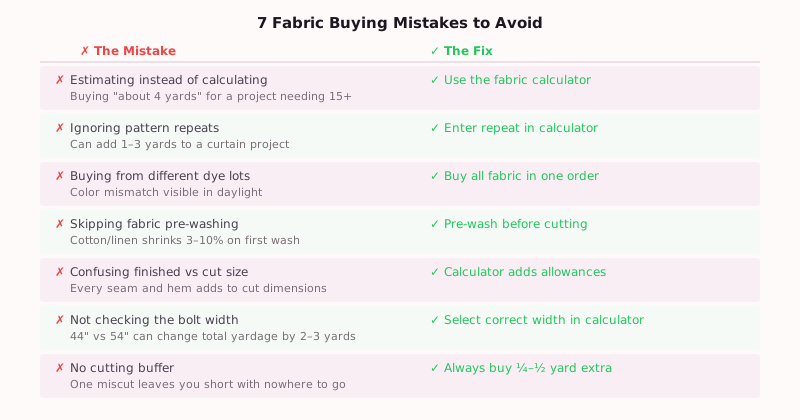
Every sewist has a fabric shortfall story. You get home, start cutting, and discover you're 12 inches short of what you need. Sometimes you can fix it. Often you can't, because the bolt is gone, the dye lot is different, or the fabric has been discontinued. The usual culprit is the same one every time: buying by eye instead of running the math.
These mistakes aren't beginner-only territory. Even experienced sewists skip steps when they're excited about a new project. Below are the seven most common ones, and exactly how to avoid each.
Mistake 1: Estimating Instead of Calculating
What happens: You look at the project, eyeball the dimensions, and buy what feels like enough. "I'll grab 4 yards, that should be fine."
Why it fails: Curtain fullness, pattern repeats, hem allowances, and the number of panels all compound. A 60-inch window at 2x fullness with 84-inch panels needs 15 yards, not 4. The gap between a visual estimate and the real calculation is often a factor of 2 to 4x.
The fix: Calculate before every purchase. Enter your finished dimensions, bolt width, fullness ratio, and allowances into the fabric calculator. It takes 90 seconds and prevents a trip back to the store.
Estimating yardage for context is fine (roughly 1 yard per linear foot of coverage works as a rough check for simple projects), but always verify with an actual calculation.
Mistake 2: Forgetting Pattern Repeats
What happens: The fabric has a 12-inch floral repeat. You calculate yardage based on the finished length and come home short because the repeat adds inches to every cut.
Why it fails: Each panel must start at the same point in the repeat so the pattern aligns across adjacent panels. On a 3-panel curtain set, you need the 12-inch repeat to align on panels 2 and 3 with panel 1. That's 2 extra repeats or 24 extra inches, nearly a yard. With a 24-inch repeat, the waste can be 2 to 3 yards on a small curtain project.
The fix: Always enter the pattern repeat in your yardage calculation. The calculator rounds each panel's cut length to the nearest full repeat. For the full breakdown of vertical versus horizontal repeats, half-drop matches, and railroaded fabric, see our pattern repeat guide.
Mistake 3: Buying from the Same Bolt for Multiple Phases
What happens: You buy fabric for a set of curtains, finish the project, then return to add a matching pillow or roman shade. The new bolt looks close, but in the window it reads as a slightly different shade.
Why it fails: Fabric is dyed in batches called "dye lots." Even the same colorway from the same manufacturer can vary noticeably between lots. Online swatches also render differently on different screens.
The fix: Buy everything you need for a room or project in one purchase. Before cutting, verify all pieces come from the same bolt. If you need a fabric cut from a bolt you've already used, bring a swatch to the store for comparison in natural light.
When buying online, order a swatch first for any project where color matching is critical.
Mistake 4: Ignoring Fabric Shrinkage
What happens: You cut precise pattern pieces from brand-new cotton, sew the project, wash it, and it's now too small or distorted.
Why it fails: Cotton shrinks 2 to 5 percent in length on first wash. Linen can shrink 5 to 10 percent. On a 90-inch quilt, 3 percent shrinkage is 2.7 inches. Small enough not to matter for a casual throw quilt, but significant for a fitted bedspread or a garment that needs to be a specific size.
The fix: Pre-wash your fabric before cutting. Wash and dry it the same way you plan to launder the finished item. Add 5 to 10 percent to your yardage calculation to account for shrinkage. Our fabric shrinkage guide has specific percentages for every common fabric type.
Mistake 5: Confusing Finished Size with Cut Size
What happens: You need a 20×20-inch pillow cover, so you buy a yard (36 inches). When you add seam allowances on all sides, you need 21×21 inches per piece, and suddenly the second piece doesn't fit in what you bought.
Why it fails: Every seam allowance adds to the cut size. A half-inch seam adds 1 inch total to the cut dimension. A 3-inch double-fold hem adds 6 inches. These additions accumulate across complex projects.
The fix: Calculate cut dimensions, not finished dimensions. Enter your finished size in the fabric calculator along with your seam and hem allowances; it returns yardage for the cut size. For garments, follow the pattern's yardage requirements rather than calculating raw fabric.
Mistake 6: Buying Without Checking the Bolt Width
What happens: You calculate yardage based on 54-inch fabric, but the bolt at the store (or the online product) is 44 inches. You buy the same number of yards but go home short.
Why it fails: Width directly determines how many panels fit across, which changes total yardage needed. On a wide curtain or quilt backing, the difference between 44-inch and 54-inch fabric can be 2 to 3 extra yards.
The fix: Check the bolt width before calculating. If the width at the store is different from what you used, recalculate. The calculator supports 36, 44, 54, 60, and 108-inch widths. A 2-minute recalculation prevents a 2-trip problem. For which width is standard for different project types, see our guide to fabric bolt widths. For backing-specific width math, our quilt yardage guide has the full breakdown.
Mistake 7: Not Buying a Buffer
What happens: You calculate exactly how much you need and buy exactly that amount. During cutting, a miscut or miscalculation leaves you 8 inches short on a critical piece.
Why it fails: Calculations are minimums. Real cutting involves small errors: a blade wanders, a piece gets marked wrong, the fabric was slightly narrower than the bolt width listed. Even experienced sewists miscut occasionally.
The fix: Always buy extra. For most projects, a quarter to a half yard over your calculated total is enough. For expensive or hard-to-source fabric, buy a full extra yard. The cost of a backup quarter-yard is always less than the cost of running out.
Specific buffers by project type:
- Simple curtains: Add ½ yard
- Patterned curtains: Add ½ to 1 yard on top of the pattern repeat allowance
- Quilts: Add ¼ yard per fabric color in the pattern
- Garments: Add ¼ yard for prints, ½ yard for plaids or stripes that need matching
- Upholstery: Add 10 percent to calculated total
Leftover fabric is rarely wasted. It makes patches, pillows, binding, or test blocks. Scraps get used. A few extra yards of the fabric you love is always better than a finished project that's 6 inches too short.
The Right Order of Operations
Follow this sequence for every fabric purchase:
- Determine finished dimensions for every component (main piece, lining, backing, binding, etc.)
- Identify bolt width by checking the product page or confirming at the cutting counter
- Calculate yardage using the fabric yardage calculator for each component
- Add allowances: pattern repeat, shrinkage buffer (5 to 10 percent for natural fibers), cutting buffer (¼ to ½ yard)
- Round up to the nearest ¼ yard increment
- Buy everything for the project in one order, same dye lot for each fabric
Takes 5 minutes. Saves hours of frustration and potentially the cost of a whole new fabric purchase.
Learn more about our calculation methods on the about page.