Fabric Shrinkage: How Much to Pre-Wash Before Cutting
Most natural fiber fabrics shrink 3 to 10% on first wash. Learn which fabrics shrink most, how to pre-wash correctly, and how much extra yardage to buy.
You've calculated your yardage, ordered the fabric, and it arrives looking perfect. You cut it without pre-washing because you want to start sewing right now. Three weeks later the finished item goes through its first wash and comes out two inches shorter and visibly distorted.
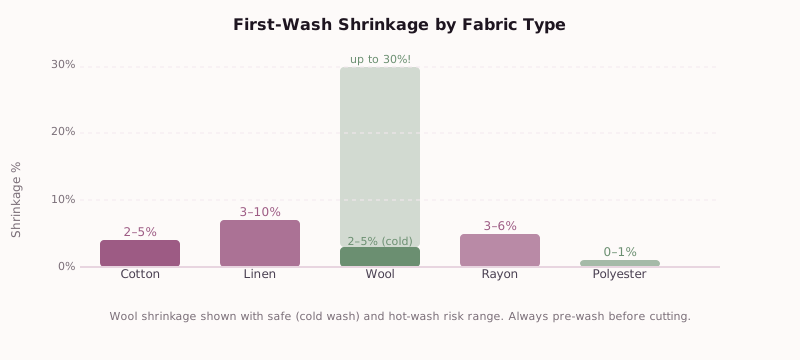
Every experienced sewist has lived through some version of that at least once. Fabric shrinkage is real, it's measurable, and it's entirely preventable. Cotton typically moves 2 to 5%, linen 3 to 10%, wool up to 30% in the wrong conditions. Pre-washing, done properly, takes all of that off the table before a single cut.
Why Fabric Shrinks
Fabric shrinkage happens for three reasons:
1. Fiber relaxation. During weaving and finishing, yarns are stretched under tension. When that tension releases in the first wash, the yarns contract toward their natural length. This is why even a "pre-shrunk" fabric can still shrink slightly.
2. Mechanical action. The agitation of washing and tumbling in a dryer physically shortens and thickens yarns, particularly in loosely woven fabrics.
3. Thermal shrinkage. Hot water and high-heat drying cause certain fibers (especially wool and some synthetics) to felt or compress, permanently reducing size.
The first wash causes the most shrinkage. After that, properly cared-for fabrics typically stabilize. That's why pre-washing is so effective: you're triggering all the shrinkage before cutting, not after finishing.
Shrinkage Rates by Fabric Type
Cotton (2 to 5% typical, up to 7%)
Quilting cotton (tightly woven, 44/45 inches) typically shrinks 2 to 3% in length and 1 to 2% in width. A 10-yard cut becomes approximately 9.7 to 9.8 yards after pre-washing. For quilts, this matters. A block meant to finish at 12 inches may finish at 11.75 inches if cut from un-shrunk fabric and then washed.
Decorator-weight cotton (heavier, often 54 inches wide) can shrink slightly more, around 3 to 4%, because of the heavier yarn weight.
Muslin, the loosely woven test fabric, can shrink 5 to 7% because the loose weave gives fibers more room to contract.
When to skip pre-washing cotton: Dry-clean-only cotton (unlikely, but possible for very delicate or beaded cotton), curtains you'll never launder (vacuum and spot-clean only), or decorative items that won't be washed.
Linen (3 to 10%, highly variable)
Linen shrinkage is the most unpredictable of the common natural fibers. Loosely woven linen in a hot wash can shrink 8 to 10% in length. A firmly woven linen decorator fabric might shrink only 3 to 4%.
The variability comes from weave density: loosely woven fabric has more space for fibers to contract. Belgian and Irish linens with tighter, more uniform weaves shrink less than loosely woven natural-colored linens.
Rule of thumb: Buy 10% extra yardage for linen projects to account for shrinkage and cut variation.
Wool (10 to 30% with heat, 2 to 5% with proper care)
Wool is the fabric that can catastrophically shrink if handled incorrectly. The culprit isn't just heat. It's the combination of heat, moisture, and agitation. Those conditions cause wool fibers to felt: their microscopic scales interlock permanently, shrinking the fabric and changing its texture from knit-like to felt-like.
A wool sweater in a hot wash and hot dryer can shrink to half its original size. Even wool fabric can shrink dramatically if machine-washed aggressively.
Pre-washing wool: Hand wash in cool water with no agitation, or machine wash on the delicate/wool cycle with cold water. Lay flat or hang to dry. Never tumble dry. Controlled pre-washing relaxes fibers without felting.
If you're making a wool garment you plan to dry-clean only, skip pre-washing entirely.
Polyester and Most Synthetics (minimal, under 1%)
Polyester and nylon don't absorb water the way natural fibers do, so they don't shrink from fiber relaxation. Synthetic fabrics can shrink slightly from heat (thermal shrinkage), but it's typically under 1% with normal laundry temperatures.
Heat damage is the real risk with synthetics. High-heat dryers can melt or distort polyester fibers at the fiber level without visibly shrinking the fabric, which weakens the cloth over time.
Rayon (3 to 6%, sometimes more)
Rayon is a semi-synthetic fiber made from wood pulp. It behaves more like cotton than polyester: it absorbs water readily and can shrink 3 to 6% in length. Some rayons are extremely unstable and shrink unpredictably. Check the care label and buy extra.
Rayon also tends to shrink unevenly (more in one direction than the other), which can distort pattern pieces. Pre-washing rayon is non-negotiable for any garment project.
Silk (2 to 4%)
Pre-washed silk shrinks modestly, around 2 to 4%. The bigger issue with silk is that some silks are labeled "dry-clean only" because they water-spot or lose their luster when wet. For washable silk (habotai, charmeuse without size finishing), pre-wash in cold water on the delicate cycle. Air dry.
How to Pre-Wash Correctly
Match your pre-wash to your planned care method. If you'll machine-wash warm and tumble-dry, pre-wash warm and tumble-dry. If you'll hand-wash cold, pre-wash cold. You want the fabric to shrink the way it will shrink in real use.
Step-by-step for cotton and linen:
- Cut your fabric off the bolt and trim away any uneven edges
- Serge or zigzag the raw edges before washing (both cotton and linen fray significantly in the wash)
- Wash in the same water temperature and cycle you'll use for the finished item
- Dry completely in the dryer
- Press with steam before cutting
For wool:
- Fill a basin or bathtub with cool water
- Submerge the fabric with minimal agitation
- Drain, gently press out excess water (don't wring)
- Roll in a towel to remove more moisture
- Lay flat on a dry towel to dry
For rayon: Use the machine's delicate cycle with cold water. Dry on low heat or hang dry.
How Much Extra Yardage to Order
Add the appropriate buffer to your calculated yardage before ordering. Get your base yardage from the fabric calculator, then multiply by the shrinkage factor:
| Fabric | Add This % |
|---|---|
| Quilting cotton | 5 to 7% |
| Decorator cotton | 6 to 8% |
| Linen | 8 to 10% |
| Rayon | 7 to 10% |
| Silk (washable) | 5 to 7% |
| Wool (careful pre-wash) | 5 to 8% |
| Polyester | 0 to 2% |
In practice: For most cotton projects, add ½ yard per 5 yards of calculated fabric. For linen, add ¾ to 1 yard per 5 yards calculated.
For a queen quilt top requiring 8.5 yards of quilting cotton: 8.5 × 1.06 equals roughly 9 yards. Round to the nearest ¼ yard that your store cuts, so order 9.25 yards. The extra ¼ yard costs pennies relative to the total and prevents the shortfall.
A Note on "Pre-Washed" and "Pre-Shrunk" Labels
Some fabric is sold as "pre-shrunk" or "pre-washed." This reduces but doesn't eliminate shrinkage. Fabric labeled pre-shrunk has been through a controlled heat and moisture process to remove most of the first-wash shrinkage, but it may still shrink 1 to 2% further.
When buying from an online retailer without clear labeling, assume the fabric hasn't been pre-shrunk. Order your extra yardage accordingly. Our guide to avoiding common fabric buying mistakes covers this and other pre-purchase checklist items.
The Cost of Not Pre-Washing
To be blunt: pre-washing takes about two hours, most of which is passive time while the washer and dryer run. Skipping it risks hours or days of sewing work.
Curtains that shrink on first wash pull up from the floor. Quilts that shrink in wash can pucker badly at seam intersections. Garments that shrink after finishing are simply too small to wear.
The risk is entirely avoidable. Pre-wash first. Always.
Calculate your base fabric yardage with the fabric yardage calculator, add your shrinkage buffer, and you'll have exactly what you need for every project. Questions about our calculation method? Visit our about page.