Curtain Fullness Ratios Explained: Flat to Luxury Pleats
Curtain fullness determines how gathered your drapes look. This guide explains 1x, 1.5x, 2x, and 2.5x fullness with fabric cost comparisons and style recommendations.
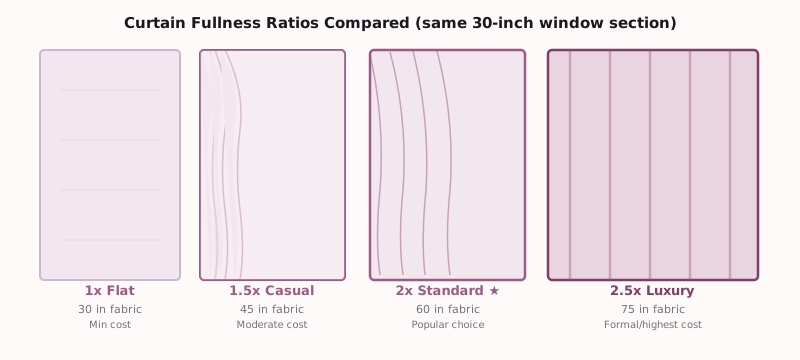
People assume curtains look gathered by accident, but the "full" look is a specific ratio: fabric width divided by finished window width. A 60-inch panel on a 60-inch window is 1x, meaning flat. Ninety inches of fabric on the same window is 1.5x, a casual gather. One hundred twenty inches is 2x, the standard curtain look. Push it to 150 inches and you're at 2.5x, the formal pleat territory. That ratio, more than any other variable, drives what your window treatments will cost.
Most first-time sewists get this wrong in one of two directions: they either buy too little fabric for the gathered look they pictured, or they buy almost twice what the style actually calls for. What follows covers what fullness means, how each ratio looks in real rooms, and exactly how it affects your yardage.
What Is Curtain Fullness?
Fullness is the ratio of fabric width to finished panel width. A single panel covering a 30-inch section of window rod needs:
- 1x fullness: 30 inches of fabric. The panel hangs flat.
- 1.5x fullness: 45 inches of fabric. Slight casual gather.
- 2x fullness: 60 inches of fabric. Standard full drape.
- 2.5x fullness: 75 inches of fabric. Formal, structured pleats.
With two panels on a 60-inch window (30 inches per panel), those per-panel numbers double:
- 1x: 60 inches total
- 1.5x: 90 inches total
- 2x: 120 inches total
- 2.5x: 150 inches total
At 54-inch fabric, that's 2, 2, 3, and 3 fabric panels respectively, though the width of each panel in the 2x and 2.5x scenarios is different. The curtain fabric calculator works through your specific window dimensions; if you need the full yardage walk-through with hems and pattern repeat, see our complete curtain fabric guide.
1x Fullness: Flat Panels
What it looks like: The curtain panel spans the window with no gather. The fabric hangs straight with minimal or no fold.
When to use it:
- Sheer panels layered behind opaque drapes
- Modern and minimalist interiors where the flat, graphic look is intentional
- Roman shades and structured valances
- When you need to see the full width of a large window and don't want fabric bunching
What it doesn't work for: Most rod-pocket, tab-top, or ring-clip styles look sparse and cheap at 1x fullness. These styles depend on the fabric gathering to look intentional.
Fabric cost: Cheapest option. On a 60-inch window at 84-inch drop, 1x fullness at $20/yard uses roughly $47 in fabric (before making) versus $93 for 2x fullness.
1.5x Fullness: Relaxed and Casual
What it looks like: Soft, relaxed gathers. The curtain has visible folds, but they're not structured. It reads as comfortable and casual, not formal.
When to use it:
- Bedrooms where you want softness without formality
- Kitchen café curtains and tier curtains
- Children's rooms
- Beach houses and casual living spaces
- Rod-pocket panels where relaxed softness is the goal
Common styles at 1.5x: Rod-pocket, tab-top, grommet, eyelet
What it doesn't work for: Formal dining rooms, grand entries, or spaces where the curtains are meant to be a design statement. At 1.5x, gathers are noticeable but not lush.
Fabric cost: Moderate. For a 60-inch window at 84-inch drop: roughly 7 to 8 yards of 54-inch fabric (2 panels, 2 fabric widths each, depending on calculations).
2x Fullness: The Classic Standard
What it looks like: Full, rich gathers that stack neatly when pulled back. When open, the panels have visible, attractive folds. When closed, they look luxurious and block light effectively.
When to use it: Almost every residential window treatment defaults to 2x. Living rooms, dining rooms, bedrooms. Any style from rod-pocket to tab-top to ring-clip looks good at 2x.
Why it's the standard: At 2x fullness, rod-pocket and tab-top styles gather attractively without the structure of a formal pleat header. Grommet and ring-clip panels hang in even, attractive folds. The look reads as quality without requiring formal pleat work.
Common styles at 2x: All of the above, especially grommet, ring-clip, and relaxed pleated panels
Fabric cost: Double the fabric versus 1x, roughly 1.3x the fabric versus 1.5x. For a 60-inch window at 84-inch drop: roughly 15 to 16 yards for two panels (3 fabric widths per panel at 54 inches).
Wait. Two panels needing 15+ yards seems like a lot. The reason: at 2x fullness on a 60-inch window (30 inches per panel), each panel needs 60 inches of fabric width. At 54-inch fabric, that's 2 widths per panel × 2 panels = 4 fabric widths. At 93 inches cut length each: (93 × 4) ÷ 36 = 10.3 yards. Mental math for curtains consistently underestimates; plug your numbers into the fabric calculator before you buy.
2.5x Fullness: Formal and Architectural
What it looks like: Deeply structured, defined pleats that hold their shape. The curtain looks architectural rather than casual. When drawn back, the fabric stacks in tight, organized folds.
When to use it:
- Formal living rooms and dining rooms
- Dining rooms with high ceilings where drama is appropriate
- Period-style rooms (Victorian, Georgian, traditional)
- Pinch-pleat, goblet, and box-pleat headers (these styles are specifically designed for 2 to 2.5x fullness)
- Hotel-quality window treatments
Header styles that require 2.5x: Pinch-pleat, three-finger pleat, goblet pleat. These styles physically require excess fabric to form the pleat structure. At 1.5x fullness there simply isn't enough fabric to create the pleat and maintain coverage.
Fabric cost: The priciest option. Per panel uses 25% more fabric than 2x. For a formal pair of floor-length pinch-pleat drapes on a 60-inch window with 108-inch drop: plan on 18 to 22 yards.
How to Choose Your Fullness Ratio
Start with the heading style. Pinch-pleat, goblet, and box-pleat headers need 2 to 2.5x. Grommet, ring-clip, and tab-top work at 1.5 to 2x. Rod-pocket works at 1.5 to 2.5x.
Consider the room. Bedrooms and casual living rooms suit 1.5 to 2x. Formal rooms justify 2 to 2.5x.
Consider the fabric weight. Lightweight sheers and voile benefit from more fullness (2 to 2.5x) because the light fabric needs extra volume to drape attractively. Heavy velvet and blackout fabric looks fine at 1.5x, because the weight itself creates structure.
Consider the budget. Every 0.5x increase in fullness adds roughly 25 to 35% to fabric cost. Going from 1.5x to 2x on a room with four windows can add $150 to $300 in fabric costs at mid-range prices.
Calculating Fabric for Your Chosen Fullness
Enter your window width, finished drop, fabric bolt width, and fullness ratio into the calculator. It multiplies window width by fullness, calculates how many fabric widths you need per panel, and returns exact yardage. For rooms with multiple windows, run each window separately and sum the totals. If you want the deeper breakdown of hem allowances, pattern repeat, and inside vs outside mount, the complete curtain fabric guide is the next read.
Our fabric cost estimator can help you budget the total material cost across all your window treatments before you commit to a fullness level.