Cotton vs Linen Fabric: Which Is Right for Your Project?
Cotton and linen both work for curtains, clothing, and home décor, but they behave very differently. Learn which fabric suits your project, budget, and care needs.
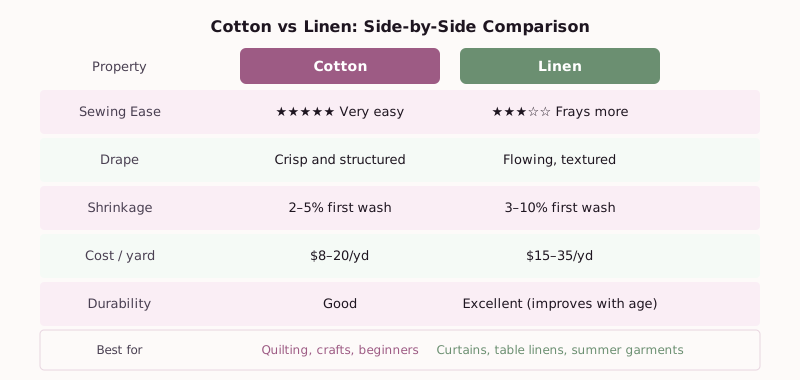
A lot of sewists treat cotton and linen as interchangeable because they're both "natural fiber, plant-based, washable." They aren't. Cotton is cheaper, more forgiving under the needle, and easier to launder. Linen is more durable, more breathable in hot weather, and has a textured drape that cotton can't fake. For most beginners and anyone on a tight budget, cotton is the right call. For curtains, bed linens, and summer clothing where breathability and texture matter, linen earns the extra dollars.
Cotton and linen are the two most common natural fiber fabrics in home sewing. Both are plant-based, both are machine washable, both are available everywhere. Past those surface similarities, they behave very differently at the cutting table, at the sewing machine, and in the laundry.
Choosing the wrong one isn't catastrophic, but it costs time and money. What follows covers every factor that matters: sewing behavior, care, drape, cost, and yardage.
The Basic Difference
Cotton comes from the cotton boll, the seed case of the cotton plant. The fibers are short and fine, which makes cotton fabric smooth, tightly woven, and very consistent in texture. It's the most widely produced natural fiber in the world, which is also why it's the cheapest.
Linen comes from the flax plant stalk. Those fibers are long and relatively stiff, which creates linen's distinctive slightly coarse, visible texture. Flax processing is more labor-intensive than cotton ginning, which is why linen costs 2 to 4 times more per yard than comparable cotton.
Both are absorbent, both breathe well, both can be dyed to virtually any color, and both shrink on first wash.
Sewing Performance
Cotton
Cotton is the most forgiving fabric to sew. It doesn't stretch (unless it's a knit blend), it presses beautifully, it holds pins well, and it frays predictably. Seams lie flat with standard pressing. Pattern pieces cut cleanly with rotary cutters or scissors.
For quilting, cotton quilting fabric (44/45 inches wide, tightly woven) is the industry standard. The consistent weave and weight across brands makes mixing fabrics from different manufacturers predictable. That matters when you're cutting 400 pieces for a patchwork design.
Best for: Quilting, beginners, structured garments, pillows and home décor with sharp lines.
Linen
Linen is stiffer than cotton and can be harder to cut cleanly because the looser weave frays aggressively. You'll need to finish raw edges immediately or use French seams. It doesn't ease around curves as readily as cotton, which makes tailored garment sewing more challenging.
On the plus side: linen presses beautifully and gets softer with each wash and wear. A linen garment you make today will feel better in five years than the day you stitched it. The wrinkles that frustrate some sewists are considered part of linen's character by others.
Best for: Curtains, table linens, summer clothing, tote bags, and anything where a relaxed, textured finish is desirable.
Drape and Appearance
This is where the two fabrics diverge most noticeably in home décor applications.
Cotton curtains hang fairly flat. Tightly woven cotton holds its shape and creates crisp, structured folds. Cotton duck and canvas work well for Roman shades, cafe curtains, and structured valances. Lighter cotton voile and batiste create soft, airy sheers.
Linen curtains have a natural, flowing drape with soft, irregular folds. The slight texture catches light differently than cotton, creating a more organic, relaxed look. Many interior designers prefer linen for living rooms and bedrooms where a less formal treatment suits the design. Linen curtains wrinkle. That's part of the aesthetic. If you want crisp, smooth curtains, linen isn't your fabric.
For table linens, a linen tablecloth has a formal elegance that cotton doesn't quite replicate. White linen on a dining table reads as "proper tablecloth." White cotton reads as "casual dining." Neither is better. It depends on the occasion.
Shrinkage and Pre-Washing
Both cotton and linen shrink on first wash, and neither shrinks by a trivial amount. Cotton typically loses 2 to 5% in length, linen loses 3 to 10%. The exact numbers depend on weave density, finishing treatments, and how you launder it. Pre-wash in the same way you plan to launder the finished item, before you cut.
When ordering, add roughly 8 to 10% to calculated yardage for linen and 5 to 7% for cotton. For the full breakdown of why different fibers shrink by different amounts and how to wash each one, see the fabric shrinkage guide.
Cost Comparison
Cotton: Quilting cotton runs $8 to $15/yard at major retailers like Joann Fabrics. Decorator-weight cotton is $12 to $20/yard. Premium designer cotton can reach $25 to $40/yard.
Linen: Standard linen fabric runs $15 to $25/yard. Heavier decorator linen is $20 to $35/yard. Premium Belgian or Irish linen can reach $40 to $60/yard.
For a pair of curtains requiring 15 yards of fabric, the difference between mid-range cotton ($15/yard) and mid-range linen ($22/yard) is $105. That's significant. But for a window treatment that will hang for 10+ years, the cost per year of use is negligible.
Run your specific numbers through our fabric calculator to see total material cost at your actual price per yard.
Care Requirements
Cotton: Machine wash warm or cold, tumble dry medium. Dry cleaning not required. Iron while damp for best results. Most cotton is colorfast after 3 to 4 washes. Cotton holds color indefinitely if washed in cold water.
Linen: Machine wash cold or gentle cycle. Tumble dry low or line dry (line drying reduces shrinkage after the initial pre-wash). Iron while slightly damp, because dry linen is very difficult to press flat. Linen softens and becomes more pliable with each wash.
For upholstery applications, neither cotton nor linen is ideal without a protective finish. Both stain and wear if used for sofa cushions untreated. Look for cotton-linen blends with a stain-resistant finish for seating fabric.
Which to Choose?
Choose cotton when:
- You're a beginner and cotton is more forgiving
- You want easy care and high washability
- You're quilting, because cotton is the quilting standard
- Budget is a constraint
- You want crisp, structured results (Roman shades, tailored garments)
- You're using a pattern and want predictable behavior
Choose linen when:
- You want a relaxed, textured, natural look
- You're making curtains for a living room or bedroom with an organic aesthetic
- You're making table linens for a formal setting
- You're making summer garments where breathability is the priority
- You plan to use and wash the item for many years (linen improves with age)
- You're making tote bags, market bags, or structured but soft accessories
Consider a cotton-linen blend when:
- You want linen's texture but cotton's ease of sewing
- You're making curtains that need to drape softly but hold shape
- Budget is between cotton-only and linen-only
Cotton-linen blends (usually 55% linen, 45% cotton or similar ratios) combine the best of both. They sew more easily than pure linen, drape better than pure cotton, and usually cost $15 to $22/yard. A reasonable middle ground.
A Note on Bolt Widths
Cotton quilting fabric is almost universally 44/45 inches wide. Decorator-weight cotton runs 54 to 60 inches. Linen varies more, typically 47 to 58 inches, with many European linens at 55 to 58 inches.
Always confirm the bolt width when ordering online. The width directly affects yardage needed; a 2-inch difference in bolt width can add or subtract ¼ to ½ yard on a large project. Our fabric bolt widths guide explains each standard width and which to pick for your project.
Before buying either cotton or linen, run your finished dimensions through the fabric calculator with the correct bolt width and your shrinkage buffer applied.